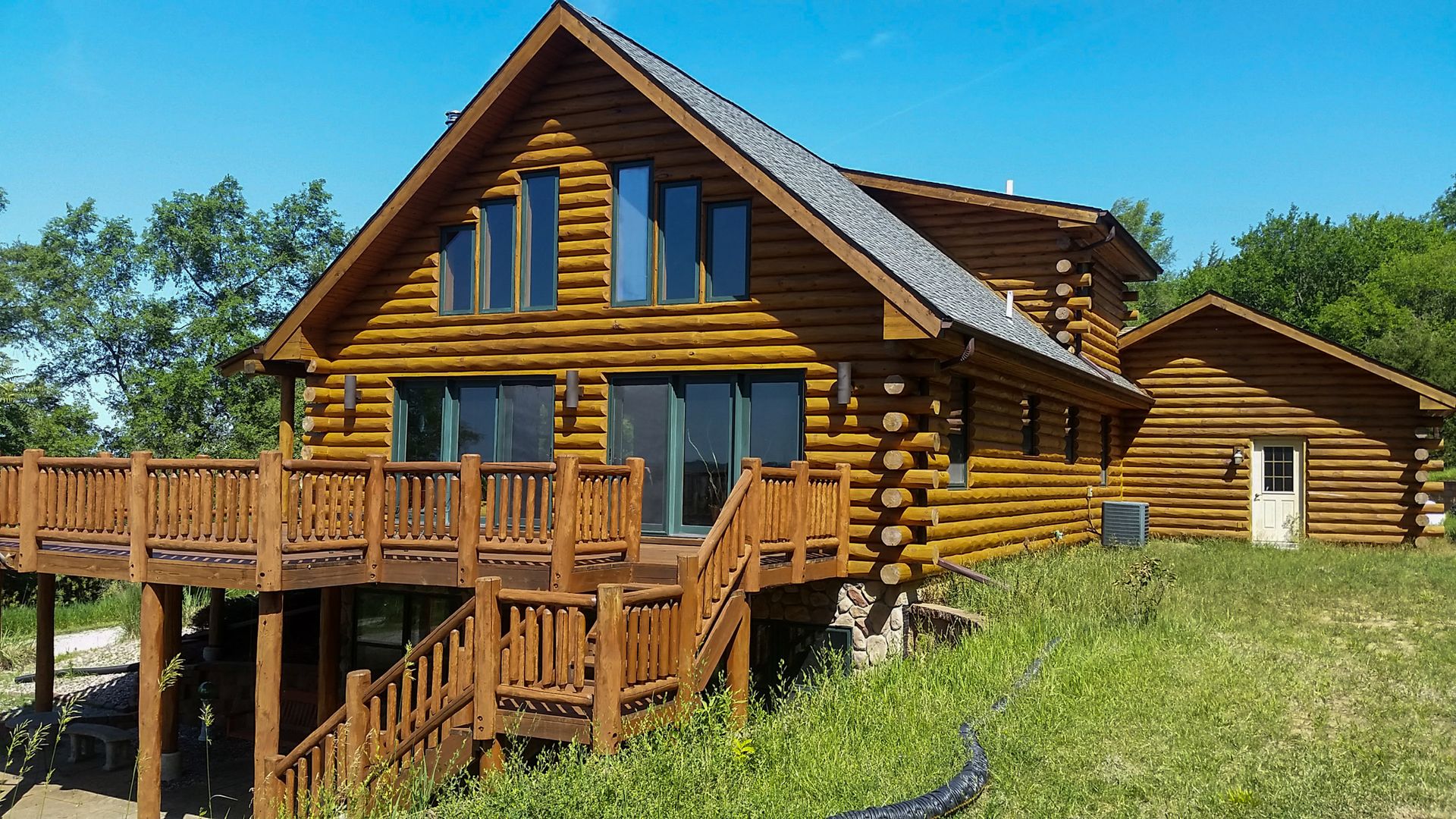
Restoring new life into your log home.
We’re Nebraska and Iowa’s most experienced log home restoration crew — and restorations are all we take on now. Here’s exactly what a full restoration covers, and how the work goes.
Everything your home needs, in the right order
Log homes are built to last for decades, but finish fails, caulk gives up, and rot finds the soft spots. A full restoration deals with all of it at once:
- Complete stain removal — media blasting back to bare wood
- Hand sanding — for a smooth, even surface ready for finish
- Log rot repair — epoxy repair, log-face replacement, or full log replacement where it’s needed
- Caulking & sealing — closing the gaps that let in water, air, and insects
- Wash-down & staining — two coats of stain, a UV clear coat, and log-end sealer
- Maintenance staining — for homes that don’t need the full treatment yet
- Inspections — before you buy, or before small problems turn into big ones
Four steps, learned the hard way
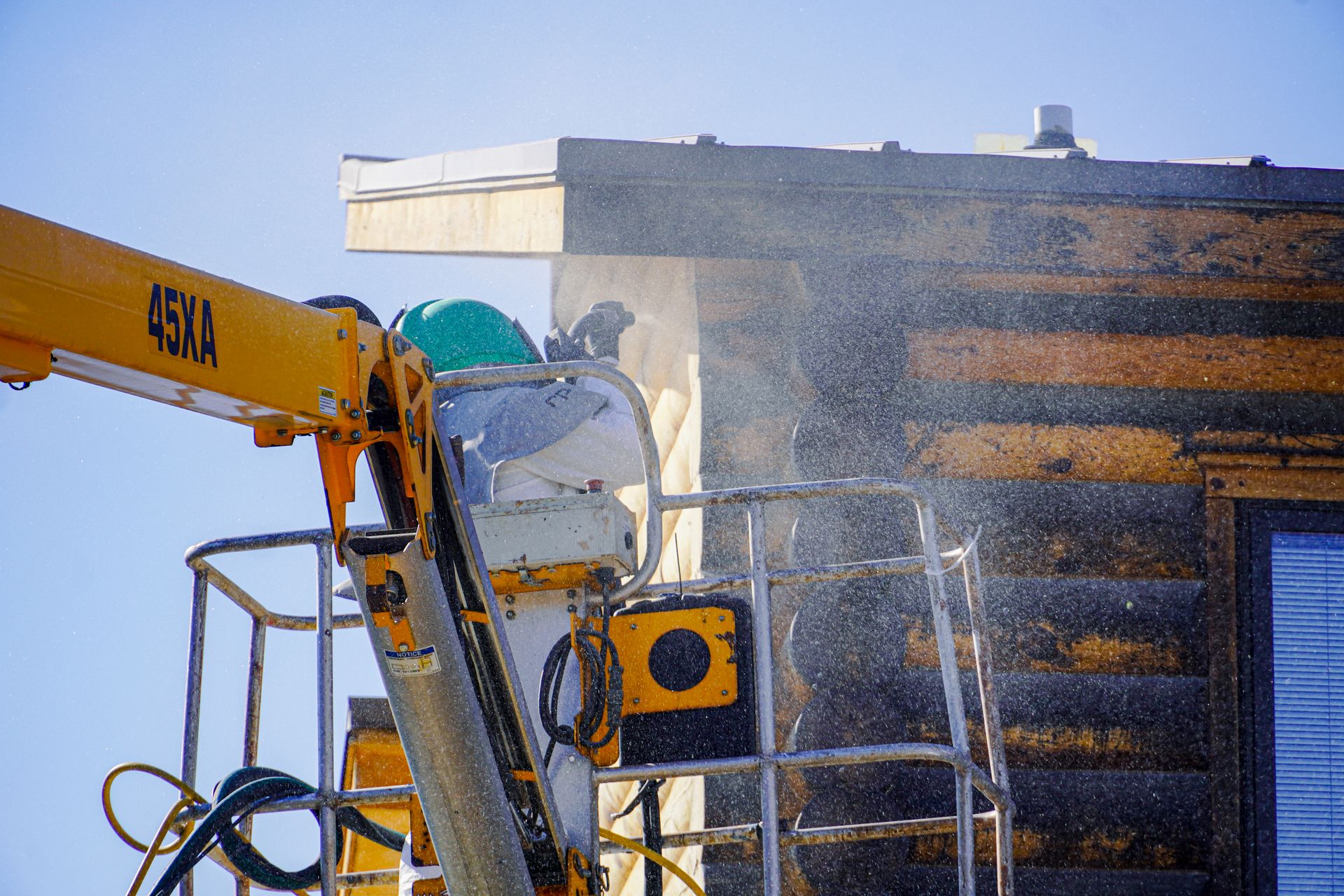
Through years of trial and error, we’ve settled on the techniques that hold up. We invested in proper media-blasting equipment back in 2015 to replace the slow grind of hand stripping and chemicals — and we haven’t looked back.
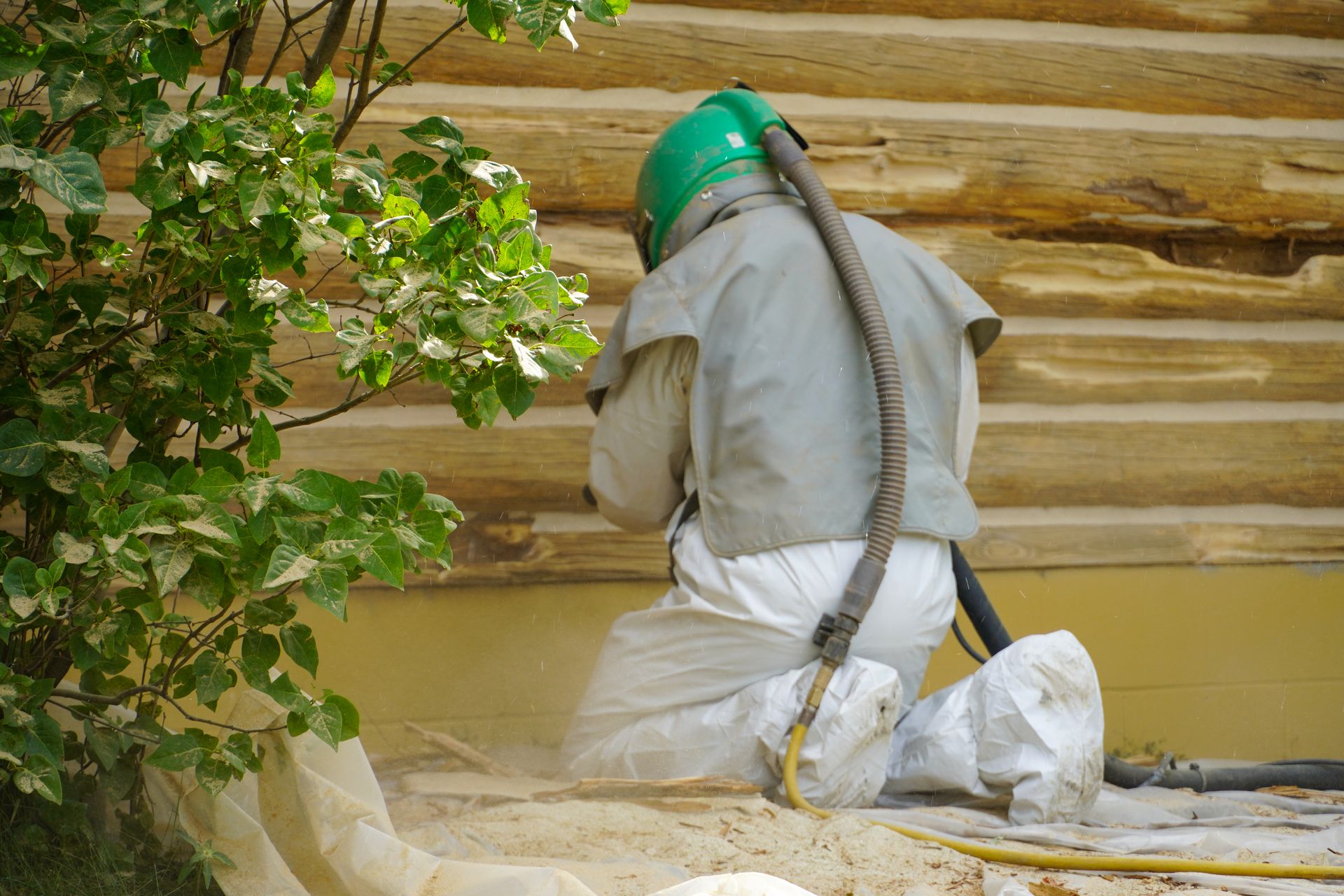
Step 1 — Blast the old finish off
We remove the old finish by media blasting with crushed recycled glass. Windows and landscaping are protected with plastic and tarps to collect as much dust as possible during the process. What’s left is clean, bare wood — the only honest starting point for a finish that’s going to last.
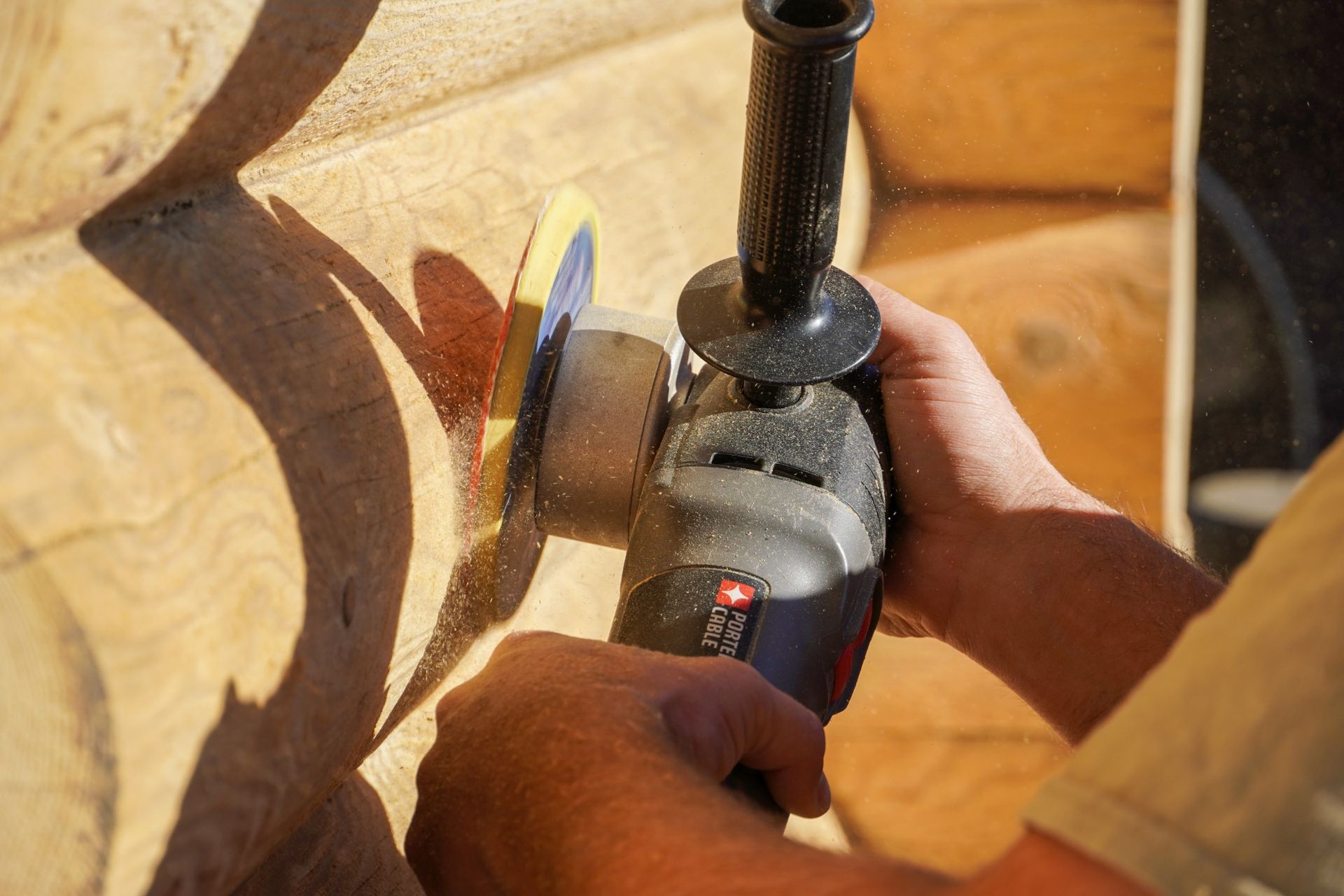
Step 2 — Hand sand the wood
After blasting, we lightly hand-sand the whole house. This removes any leftover bits of finish and, most of all, flattens the texture the blasting leaves behind, so the new stain goes on even and stays even.
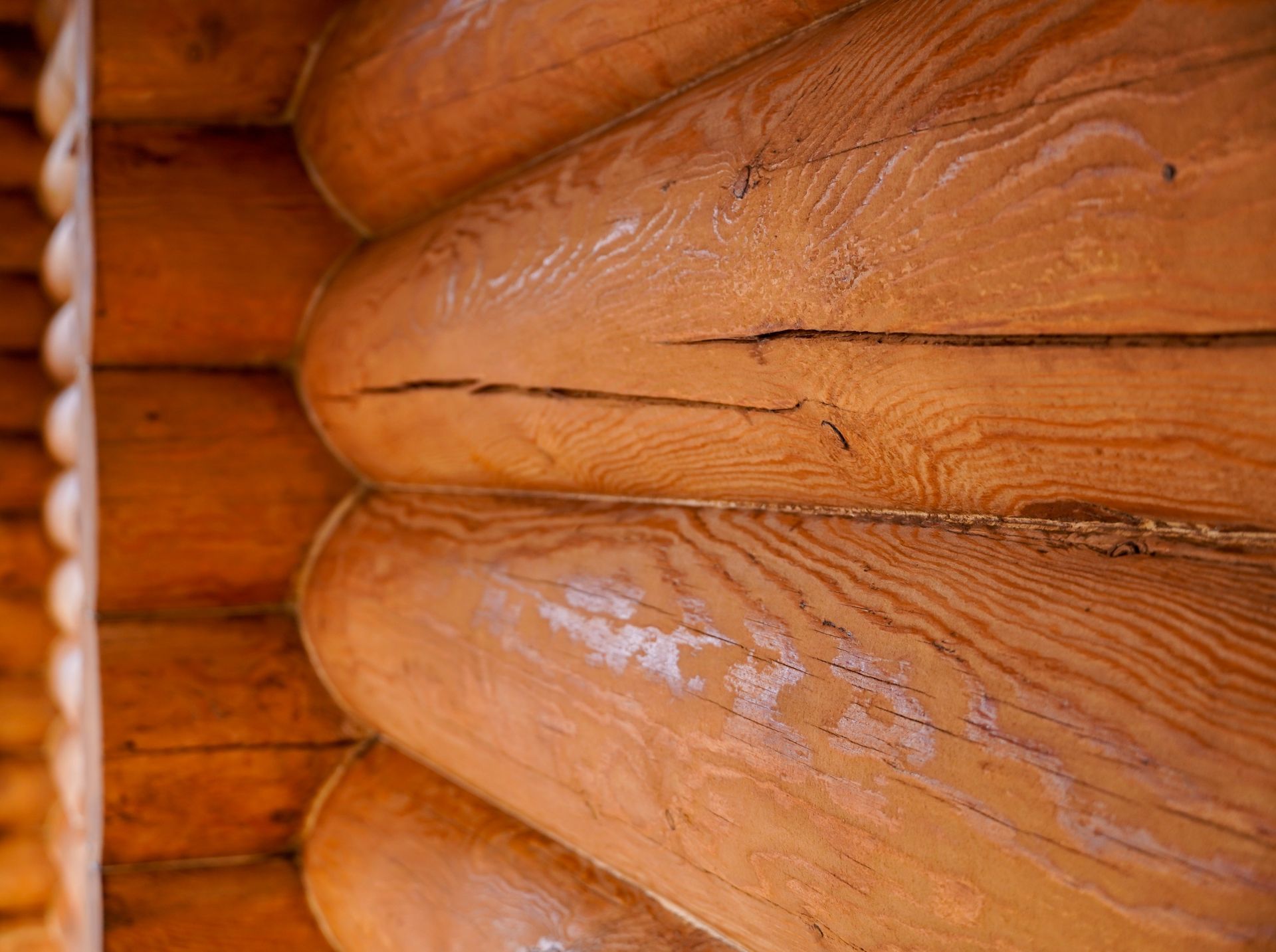
Step 3 — Find and fix the rot
With the finish off, we locate every rotten area of wood. All soft, decayed wood is completely removed — no shortcuts, no painting over problems. Depending on the damage, we repair with epoxy, replace the log face, or replace the full log. While we’re in there, we seal up the areas that cause future rot and energy loss.
Step 4 — Wash, stain, and seal
We wash the house down top to bottom to remove dust and dirt, protect the windows and everything around the house with painter’s plastic, then spray and back-brush three coats of finish: two coats of stain and one coat of UV clear coat. Last, we apply log-end seal to all exposed end grain to prevent future log-end rot.
The difference, on one wall
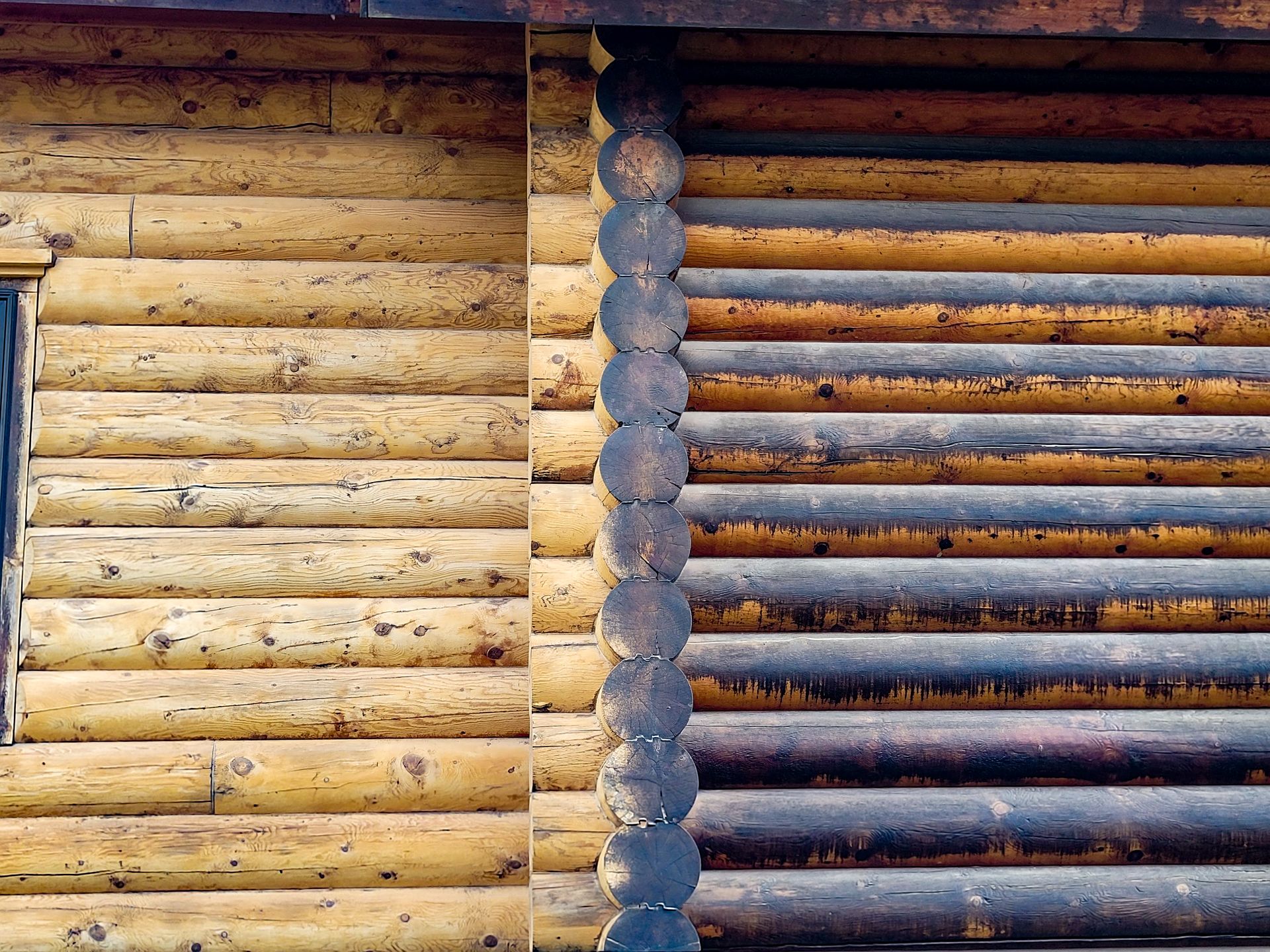
At Beaver Lake, one wall caught mid-restoration shows it plainly — blasted and refinished logs on the left, the tired original finish on the right. Multiply that by the whole house and you’ve got the idea.
Know what you’re buying — or what you’re living with
We suggest every buyer have a log home inspected before purchasing the property. We inspect for rotten logs, the condition of the stain and finish, water runoff patterns, and the future issues most likely to become expensive repairs. Already own your home? An inspection tells you whether you need a full restoration, a maintenance stain, or nothing at all this year — and we’ll tell you straight which one it is.
A full restoration takes 2–6 weeks. Our calendar takes fewer.
The average home takes 3–4 weeks of work. But we only do around 3–5 full restorations and 6–8 maintenance stainings per year, so our schedule books up fast. We specialize in log home maintenance, restoration, and inspections locally in Nebraska and Iowa, working within about three hours of the Omaha metro area. If you’re thinking about next season, the time to get on the list is now.
Ask about your home
Tell us where the home is, how old it is, and what you’re seeing — failing finish, soft logs, or just a home that’s due. The note lands right with our crew. Prefer to talk? Call (402) 980-3612.